


Florida Homeowners Insurance
Homeowners insurance is the topic that catches relocating buyers off guard more consistently than any other, and being honest about it upfront is more important than sugarcoating it. Florida's insurance market has undergone significant disruption over the past several years, and premiums — particularly for barrier island and coastal properties — are meaningfully higher than what most out-of-state buyers are accustomed to paying. Understanding the full insurance picture before you make an offer on a Florida property isn't optional — it's one of the most important steps in the home buying process, and it's one that buyers who skip it consistently wish they hadn't.
At Florida Real Estate Places, we factor insurance costs into every buyer conversation from the start. We connect every buyer we represent with trusted, experienced Florida insurance agents, and we encourage that conversation to happen early — ideally before an offer is finalized — so that realistic insurance cost estimates are part of the decision-making process rather than a surprise at closing. Understanding your true all-in cost of ownership before you sign a contract is the foundation of a sound real estate decision in the Florida market.


FLORIDA'S INSURANCE MARKET
Florida's insurance market has undergone significant disruption in recent years. A combination of hurricane losses, litigation abuse, reinsurance cost increases, and carrier insolvencies reduced the number of private insurers actively writing policies in the state dramatically, pushing premiums higher across virtually every property category and forcing many homeowners onto Citizens Property Insurance — the state-backed insurer of last resort — when private market options became unavailable or unaffordable. The market has shown signs of stabilization following legislative reforms passed in 2022 and 2023, and several new carriers have re-entered the Florida market since then. Premiums remain significantly elevated compared to pre-2020 levels and compared to most other states, however, and buyers should budget accordingly rather than assuming Florida insurance costs are comparable to what they've paid elsewhere.
WHAT TO EXPECT FOR HOMEOWNERS INSURANCE COSTS
Insurance costs in Sarasota vary significantly based on property type, location, age of construction, roof condition, elevation, and proximity to the coast. As a general orientation for relocating buyers, mainland Sarasota homes built after 2002 — when Florida's post-Hurricane Andrew building codes took full effect — with newer roofs and favorable wind mitigation features typically see annual homeowners insurance premiums in the range of $3,000 to $6,000 depending on coverage level and carrier. Older construction, properties with aging roofs, and homes in higher wind or flood exposure areas will see meaningfully higher premiums, and some older properties have faced significant challenges obtaining adequate coverage at any price point from private carriers.
Barrier island properties carry substantially higher insurance costs than mainland equivalents — the combination of wind exposure, flood zone designation, and replacement cost values on waterfront properties can push annual insurance costs to $10,000, $20,000, or significantly more for high-value Gulf-front homes. These are not hypothetical numbers — they are the real costs that barrier island buyers are paying in today's market, and understanding them before you make an offer on a waterfront property is essential to making a sound financial decision.
WIND MITIGATION AND ROOF AGE
Two factors that have an outsized impact on Florida homeowners insurance premiums — and that relocating buyers from other states frequently underestimate — are roof age and wind mitigation features. Florida insurers place enormous weight on roof condition and age, and many carriers will not write new policies on homes with roofs older than 15 to 20 years, or will impose dramatically higher premiums and lower coverage limits on older roof systems. Buyers purchasing an existing home with an aging roof should budget for roof replacement as a near-term capital expense and factor that cost into their offer and overall ownership budget — a roof replacement in Florida typically runs $15,000 to $40,000 or more depending on the size of the home, the roofing material, and current labor and material costs.
Wind mitigation inspections document hurricane-resistant construction features including roof shape, roof-to-wall connection type, opening protection, and roof deck attachment — and properties with strong wind mitigation features can qualify for meaningful premium discounts with most Florida insurers. Obtaining a wind mitigation report is a standard step in the Sarasota home buying process and one we recommend on every purchase of an existing home. Homes built to Florida's post-2002 building codes generally perform well on wind mitigation inspections and qualify for the most favorable premium treatment available in the market, which is one of the practical and often underappreciated advantages of newer construction in Florida beyond aesthetics and finishes.

START YOUR FLORIDA HOME SEARCH WITH EYES WIDE OPEN
Understanding Florida's insurance landscape before you buy is one of the most important things you can do to protect your investment and avoid costly surprises. Our team is here to help you navigate every layer of the Florida home buying process — from neighborhoods and property selection to insurance, financing, and closing. Reach out today and let's start the conversation.


FLOOD INSURANCE
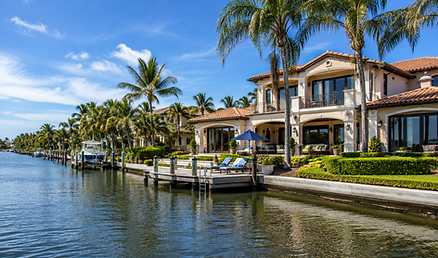
Flood insurance is separate from homeowners insurance in Florida and is not included in a standard homeowners policy under any circumstances — it must be purchased separately, either through the National Flood Insurance Program administered by FEMA or through a private flood insurer. Many properties in Sarasota County — and virtually all barrier island properties — fall within FEMA-designated flood zones that require flood insurance as a condition of financing, meaning lenders will not fund a mortgage on a property in a designated flood zone without proof of a compliant flood policy in place at closing.
Flood insurance costs are determined by the property's flood zone designation, the elevation of the lowest habitable floor relative to the Base Flood Elevation established by FEMA, and the coverage amounts selected for both the structure and the contents. A property with a favorable elevation certificate — showing that the lowest floor sits well above the Base Flood Elevation — can qualify for significantly lower flood insurance premiums than an identical property that sits at or below the established flood level. For this reason, obtaining an elevation certificate and understanding a property's flood zone status is one of the first due diligence steps we recommend on any waterfront or coastal purchase, and we factor estimated flood insurance costs into every buyer consultation before an offer is made.
CITIZENS PROPERTY INSURANCE
Citizens Property Insurance Corporation is the state-backed insurer of last resort in Florida — created to provide coverage when private market options are unavailable or unaffordable for a given property. Citizens has grown significantly over the past several years as private carriers exited the market or tightened underwriting, and it currently insures a substantial number of Florida properties across all property types and locations. While Citizens provides an important safety net for the Florida insurance market, it carries important limitations that buyers should understand before relying on it as a long-term coverage solution. Citizens policies are subject to annual rate increases, coverage limits that may fall below full replacement cost on higher-value properties, and a depopulation program through which Citizens actively encourages policyholders to move to private market carriers when comparable coverage becomes available. Buyers who are quoted Citizens coverage during the purchasing process should work with their insurance agent to understand whether private market alternatives exist and what the long-term coverage and cost trajectory looks like before closing.
WORKING WITH A FLORIDA-EXPERIENCED INSURANCE AGENT
Navigating Florida's insurance market is not a task for a generalist — the carrier landscape, coverage options, Citizens eligibility rules, and the interplay between homeowners, flood, and wind policies require an agent with specific Florida expertise and access to the carriers actively writing in this market. An agent who primarily writes coverage in other states may not have relationships with the Florida-admitted carriers that offer the most competitive terms, and may not be familiar with the wind mitigation credits, elevation certificate requirements, and coverage structures that define Florida's unique insurance environment.
We connect every buyer we represent with trusted, experienced Florida insurance agents as part of the transaction process, and we encourage insurance consultations to happen early — ideally before an offer is finalized — so that realistic insurance cost estimates are part of the decision-making process rather than a surprise at closing. If you are beginning to explore a purchase in Sarasota and want to understand what insurance costs might look like for a specific property type or location before you start your search, we are happy to facilitate that conversation as part of our buyer consultation process.
FREQUENTLY ASKED QUESTIONS
Real answers to frequently asked questions about Florida Homeowners Insurance from Sarasota home buyers.
Why is homeowners insurance so expensive in Florida?
Florida's insurance costs reflect a combination of factors that don't exist at the same level in most other states — hurricane exposure, high litigation rates that historically drove up carrier costs before recent legislative reforms, rising reinsurance costs in the global market, and the replacement cost values associated with coastal and waterfront properties. Legislative reforms passed in 2022 and 2023 have begun to stabilize the market and attract new carriers back to the state, but premiums remain significantly elevated relative to pre-2020 levels and relative to most comparable markets nationally. Buyers who understand this going in make better decisions than those who discover it at closing.
Do I need flood insurance if I'm not on a barrier island?
Possibly — flood zone designation is property-specific and is not limited to barrier island locations. Many mainland Sarasota properties also fall within FEMA-designated flood zones, particularly those near the Intracoastal Waterway, coastal rivers, and low-lying areas throughout the county. The only way to know whether a specific property requires flood insurance as a condition of financing is to verify its flood zone designation through FEMA's flood map service or request a flood zone determination during the transaction. We verify flood zone status on every property we represent before an offer is made.
What is a wind mitigation inspection and do I need one?
A wind mitigation inspection is a professional assessment of a home's hurricane-resistant construction features — roof shape, roof deck attachment, roof-to-wall connections, and opening protection — that documents the property's resistance to wind damage. Most Florida insurers use wind mitigation reports to calculate premium discounts for properties with qualifying features, and a strong wind mitigation report can result in meaningful annual premium savings that more than offset the modest cost of the inspection itself. We recommend wind mitigation inspections on virtually every existing home purchase in Sarasota as a standard part of the due diligence process.
How does roof age affect my insurance in Florida?
Roof age is one of the single most significant factors Florida insurers use to underwrite homeowners policies. Many carriers will not write new policies on homes with roofs older than 15 to 20 years, and those that do often impose significantly higher premiums and lower coverage limits than they would on a comparable home with a newer roof. Buyers considering a home with an aging roof should obtain insurance quotes before finalizing their offer — not after — and should factor the cost of roof replacement into their overall ownership budget and offer strategy.
What is Citizens Property Insurance and should I be concerned if a property is insured through Citizens?
Citizens Property Insurance Corporation is Florida's state-backed insurer of last resort. Finding that a property is currently insured through Citizens is not automatically a red flag — many well-maintained properties carry Citizens coverage simply because private market alternatives became unavailable or uncompetitive in recent years. What buyers should understand is that Citizens policies carry specific limitations, are subject to regular rate increases, and are subject to the state's depopulation program. Buyers taking over a Citizens policy should work with a Florida insurance agent to determine whether private market alternatives exist and what the long-term coverage picture looks like.
When should I start thinking about insurance during the home buying process?
As early as possible — ideally before you make an offer on a specific property. Waiting until you are under contract to investigate insurance costs is one of the most common and most expensive mistakes Florida buyers make. Understanding the insurance landscape for a specific property type, flood zone, and location before you commit to a purchase price gives you accurate information to make a sound financial decision and eliminates one of the most common sources of unpleasant surprises in the Florida closing process. Our team facilitates insurance consultations as part of every buyer engagement — not as an afterthought.